Defensive Security
SOC Efficiency
Fewer alerts. Better ones.
Your SOC does't have a visibility problem. It has a signal problem.
Analysts drown in low-fidelity alerts, real threats slip through unnoticed, and fatigue burns out your best talent. We optimize the SIEM, EDR, and log sources you already own—filtering the noise so every alert that fires actually warrants investigation. No migrations. No rip-and-replace.
What we optimize
Analysts drown in low-fidelity alerts, real threats slip through unnoticed, and fatigue burns out your best talent. We optimize the SIEM, EDR, and log sources you already own—filtering the noise so every alert that fires actually warrants investigation. No migrations. No rip-and-replace.
Alert triage and tuning
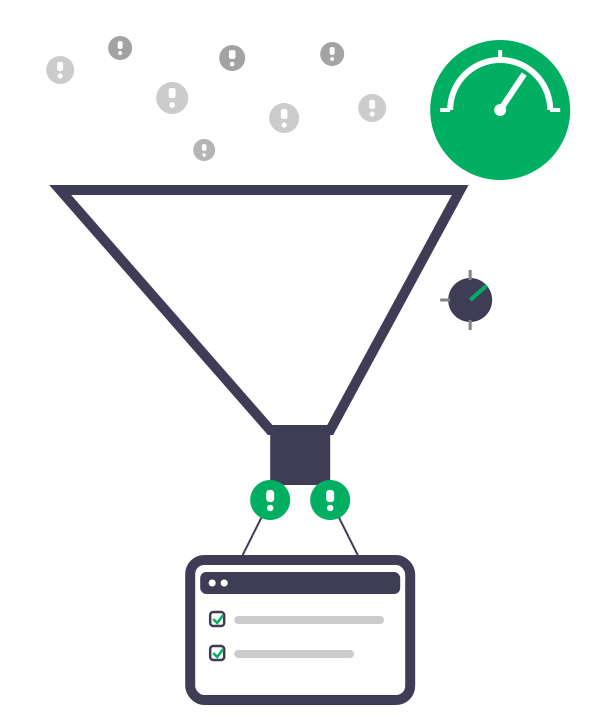
We audit your noisiest, lowest-fidelity rules to overhaul suppression logic and baseline thresholds. By eliminating false-positive churn, your analysts reclaim hours every shift to focus on genuine compromise indicators.
Detection engineering
We map your detection logic directly to the MITRE ATT&CK framework to expose real blind spots—from credential dumping to LOLBin abuse. We don't chase 100% theoretical coverage; we engineer high-fidelity detections prioritized around your specific threat model, assets, and industry risks.

Workflow and process review
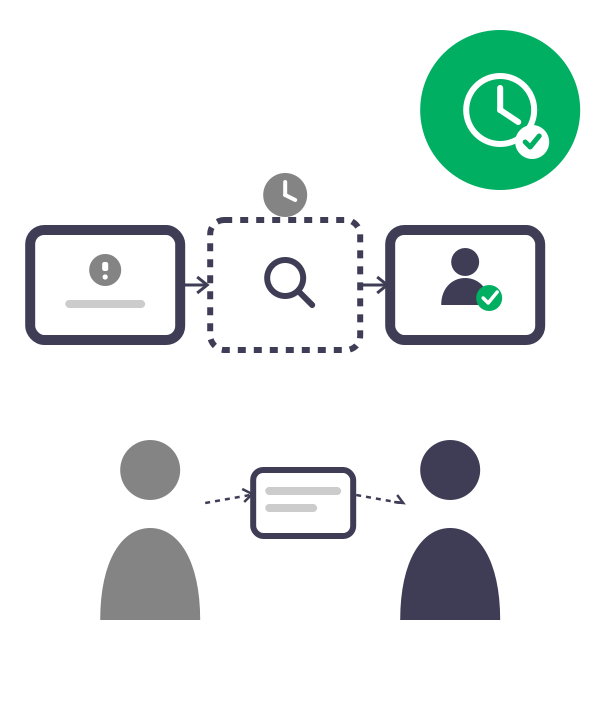
Great detections fail without clean execution. We streamline escalation paths, triage runbooks, and shift handoffs to eradicate friction between an alert triggering and containment actions beginning.
Our approach
We don't deliver theoretical slide decks or recommendations you have to implement yourself. We embed with your team, make measurable changes directly in your production tools, and ensure your analysts have full ownership long after our engagement ends.
Assessment and baseline
We start by measuring what's actually happening: alert volume by rule, time to triage, false positive rates, and analyst workload. This baseline is what proves improvement later, not a guess about what feels broken. It also tells us where to focus first — a handful of rules are usually responsible for most of the noise, and fixing those has an outsized effect on how the SOC feels to work in day to day.

Tuning and detection development
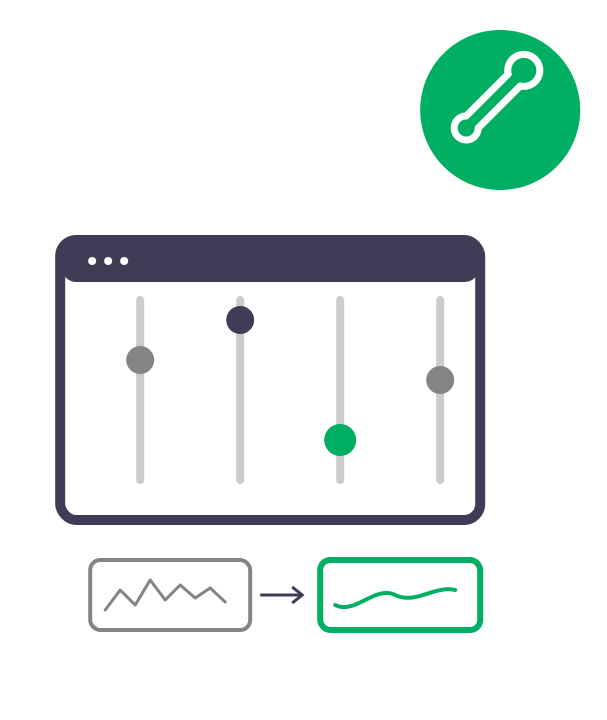
We work directly in your tooling, alongside your team rather than in isolation, tuning existing rules and building new detections where they're needed most based on the baseline data.
Validation and handoff
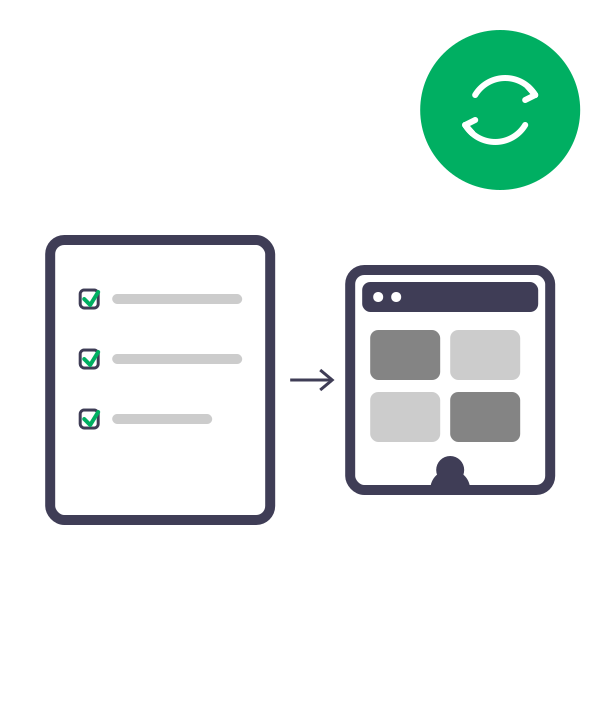
Every tuned rule and new detection is validated before it ships, and documented so your team owns it going forward. We're not interested in leaving you dependent on us to maintain your own detection logic.
Built around your compliance requirements
Detection and monitoring aren't just an operational concern — they're an explicit control requirement in most frameworks:
- PCI DSS — Requirement 10 calls for logging and monitoring of access to cardholder data, with alerting that's actually acted on, not just collected.
- SOC 2 — the Security criteria expects evidence of active monitoring and timely response to security events, not just a SIEM license.
- HIPAA — the Security Rule's audit controls provision requires monitoring of access to electronic protected health information.
- CMMC — several practices under the Audit and Accountability and Incident Response domains depend on detections that actually fire and get triaged.
Related services
Penetration Testing
Network, web application, and internal penetration testing for organizations in Tallahassee and across Florida. Findings you can act on, not a scanner dump.
Security Consulting
Security program assessment, roadmap, and compliance readiness (SOC 2, PCI DSS, HIPAA, CMMC) for growing organizations.